How Retail Buyers Choose Products: 10 Factors That Influence Buying Decisions in 2027

How Retail Buyers Choose Products: 10 Factors That Influence Buying Decisions in 2027
Introduction
Retail buyers see thousands of products every year.
But only a small percentage make it into a store's assortment.
So what makes a buyer decide to place an order?
It is rarely just about whether a product looks attractive. Buyers need to consider customer demand, retail price, margin, product differentiation, display value, MOQ, lead time, supplier reliability, and the possibility of building a broader collection.
For suppliers, understanding how retail buyers think can make product development and communication much more effective.
Here are 10 factors that commonly influence retail product selection.

1. Customer Demand Comes First
The first question a retail buyer needs to answer is:
“Will our customers actually want this?”
Buyers may look at:
- Existing sales data
- Customer demographics
- Current retail trends
- Online demand
- Seasonal demand
- Competitor assortments
- Customer feedback
- Store positioning
A product does not necessarily need to be something customers are already searching for.
Sometimes buyers are interested in products that introduce a new concept, provided the product is easy to understand and fits their customer base.
This is particularly relevant for innovative decorative products.

2. Retail Price and Perceived Value
Retail buyers usually think about both cost and perceived value.
A product can be inexpensive to purchase but difficult to sell if customers do not understand why it is worth the retail price.
Buyers therefore consider:
- Wholesale price
- Expected retail price
- Product quality
- Packaging
- Materials
- Design
- Function
- Brand positioning
A product with strong visual appeal and a clear story can sometimes support a higher perceived value than a similar-looking commodity product.
3. Expected Retail Margin
Margin is an important part of retail buying decisions.
Buyers need to understand whether the wholesale cost leaves enough room for:
- Retail pricing
- Promotions
- Discounts
- Operating costs
- Distribution
- Returns
- Seasonal markdowns
However, margin should not be considered independently.
A product with a higher theoretical margin may still be unattractive if it sells slowly.
For this reason, buyers often consider margin together with expected sales velocity.

4. Product Differentiation
Retailers generally have little reason to add another product that looks exactly like products already available in the market.
Buyers may therefore ask:
What makes this product different?
Differentiation can come from:
- Original design
- Unique materials
- Function
- Artwork
- Packaging
- Shape
- Cultural story
- Artist collaboration
- Customization
- Exclusive designs
The difference does not always need to be technological.
Sometimes a familiar product category presented in a new way can create enough interest.
5. Display Appeal
Retail products have to compete for attention.
A buyer may therefore consider what happens when the product is placed on a shelf, table, wall, or display fixture.
Important factors include:
- Color
- Shape
- Size
- Packaging
- Lighting
- Visual storytelling
- Product photography
- Display configuration
For stores with limited space, products with strong visual impact can be particularly useful.
A product that looks interesting from several feet away has an advantage in physical retail because customers may notice it before reading the packaging.
6. Product Story
A product becomes easier to merchandise when the retailer has a clear story to tell.
The story might come from:
- An artist
- A famous artwork
- A city
- A landmark
- Local culture
- Nature
- A historical site
- A seasonal event
- A brand collaboration
For example, a simple decorative product can become part of a Paris collection, museum collection, national park collection, Christmas collection, or artist collection.
The product itself is important, but the story can help explain why the customer should care about it.
7. Customization and Exclusivity
Retail buyers often look for ways to make their assortment different from competing stores.
Customization can include:
- Exclusive artwork
- Store branding
- Local landmarks
- Regional themes
- Seasonal designs
- Artist collaborations
- Custom packaging
- Limited editions
For suppliers, the ability to adapt an existing product platform can be particularly valuable.
Instead of developing a completely new product for every customer, one proven product structure can support multiple retail collections.
8. MOQ and Inventory Risk
Even when a buyer likes a product, the required order quantity can affect the final decision.
Buyers may evaluate:
- MOQ
- Initial investment
- Inventory turnover
- Reorder flexibility
- Packaging requirements
- Number of SKUs
- Seasonal selling windows
This is especially important for new products.
A retailer may prefer to test a product in a smaller quantity before committing to a larger order.
For suppliers, flexible sampling, reasonable MOQs, and clear production planning can make new-product testing easier.
9. Supplier Reliability
Retail buyers are not only buying a product.
They are also choosing a supplier.
Important questions include:
- Can the supplier maintain consistent quality?
- Can production meet the required quantity?
- Are lead times reliable?
- Can packaging be produced correctly?
- Can artwork and colors be reproduced consistently?
- Can the supplier support future reorders?
- Can required compliance documents be provided?
For a successful retail product, the first shipment is only part of the relationship.
The buyer also needs confidence that the product can be supplied again if it performs well.
10. Can the Product Become a Collection?
One of the most useful questions a buyer can ask is:
“Can this become more than one SKU?”
A strong product platform may support:
- Different artwork
- Different colors
- Different cities
- Different artists
- Different holidays
- Different cultural themes
- Different packaging
- Different sizes
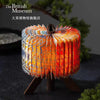
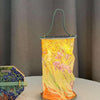
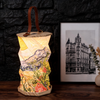
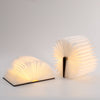
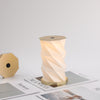
For example, one decorative lighting structure could potentially become:
City Collection → Museum Collection → Holiday Collection → Artist Collection
This gives retailers more flexibility while maintaining a recognizable product structure.
What Do Retail Buyers Usually Look for From Suppliers?
A strong supplier presentation should make the buyer's decision easier.
Instead of sending only a product catalog and price list, suppliers can provide:
Product concept
What is the product and why might customers want it?
Target customer
Who is most likely to buy it?
Retail positioning
Where could it be sold?
Suggested retail price
What price level might make sense?
Customization options
What can be changed?
MOQ
What is the minimum practical order?
Lead time
How quickly can it be produced?
Packaging
Is it ready for retail display?
Compliance
Are relevant test reports or certifications available?
Collection potential
Can the product support additional designs?
This information allows buyers to evaluate the product much faster.
How Retail Buyers Evaluate a New Product
A useful way to think about the buying process is:
Customer → Product → Price → Margin → Differentiation → Display → Risk → Supplier
The buyer is effectively asking:
- Who will buy it?
- Why will they buy it?
- What price will they accept?
- Does the economics make sense?
- Is it different enough?
- Will it attract attention in-store?
- How much inventory risk is involved?
- Can the supplier deliver consistently?
The more clearly a supplier can answer these questions, the easier it becomes for the buyer to evaluate a new product.
Expert Tip
Suppliers sometimes focus too much on explaining how the product is made.
Retail buyers are often more interested in understanding how the product can be sold.
Instead of only saying:
“This product uses special materials and a unique manufacturing process.”
A stronger supplier presentation can explain:
“This product can be positioned as a decorative home accessory, customized with local artwork, and developed into seasonal or destination-specific collections.”
The second approach connects manufacturing capability with the buyer's actual retail decision.
Key Takeaway
Retail buyers do not choose products based on one factor.
They typically need to balance:
Customer Demand + Retail Price + Margin + Differentiation + Display Appeal + Story + Customization + MOQ + Supplier Reliability + Collection Potential
For suppliers, understanding these factors can change the way new products are developed and presented.
The goal is not simply to create a product that looks good.
It is to create a product that a retailer can understand, display, sell, reorder, and potentially develop into a larger collection.
At DECO, we work with international retail and cultural product buyers to develop customizable decorative and folding lighting products for different artwork, seasonal, cultural, destination, and retail concepts. More information is available from DECO.
Related Articles
- Wholesale Retail Products: 15 Product Categories Retailers Can Explore in 2027
- Wholesale Home Décor: 15 Product Categories Retailers Can Explore in 2027
- Wholesale Decorative Lighting: 15 Product Categories Retailers Can Explore in 2027
- Wholesale Lifestyle Products: 15 Product Categories Retailers Can Explore in 2027
- Wholesale Museum Gifts: 15 Product Ideas for Museum Stores in 2027
- Wholesale Souvenirs: 15 Product Categories for Retailers in 2027
- How to Choose Wholesale Products for a Retail Store
About the Author
Kairos — Export Director at DECO
Kairos works with international retailers, distributors, cultural organizations, and brands on product development, customization, artwork applications, and retail-oriented cultural and creative products.
About DECO
DECO is a China-based cultural and creative product manufacturer specializing in decorative and folding lighting products. The company develops customizable products for retail, home décor, cultural, artistic, seasonal, and destination-oriented applications.