What Products Have High Profit Margins?
What Products Have High Profit Margins?
High-Margin Products Are Not Always the Cheapest Products to Manufacture
For retailers, choosing products with healthy profit margins is just as important as finding products that sell well.
A product can generate strong sales but still produce limited profit if:
- The wholesale price is too high
- The retail price is difficult to increase
- Competition is intense
- Shipping costs are high
- Customers see little difference between competing products
On the other hand, some products can achieve stronger margins because customers perceive them as more valuable than their production cost suggests.
This is especially true when a product combines:
Good Design + Functionality + Differentiation + Customization + Strong Perceived Value
That is why retailers should not look only at manufacturing cost.
They should look at the relationship between cost, retail price, customer demand, and perceived value.

Short Answer
Products with high profit margins often include:
- Home décor
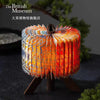
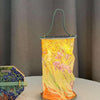
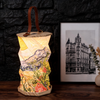
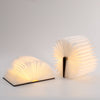
- Decorative lighting
- Personalized products
- Art-inspired merchandise
- Seasonal products
- Private-label products
- Specialty accessories
- Collectibles
- Novelty products
- Small lifestyle products
- Exclusive products
- Customized retail merchandise
The highest-margin opportunities often come from products that are difficult to compare directly on price.
When customers see a product as unique, exclusive, beautiful, useful, or meaningful, retailers have more flexibility in pricing.
What Determines a Product's Profit Margin?
A product's profit potential depends on much more than its manufacturing cost.
Retailers should consider:
Wholesale Cost
How much does the retailer pay the supplier?
Retail Price
How much are customers willing to pay?
Shipping Cost
Is the product expensive or inexpensive to transport?
Packaging Cost
Does the product require special packaging?
Marketing Cost
How much does it cost to generate demand?
Return Rate
Are customers likely to return the product?
Competition
Can customers easily find identical products elsewhere?
Perceived Value
How valuable does the product appear to the customer?
A product with a relatively low production cost is not automatically highly profitable.
The real opportunity comes when the product can support a strong retail price.

1. Home Décor Products
Home décor can offer attractive margins because customers are purchasing more than basic functionality.
They are also purchasing:
- Style
- Atmosphere
- Personality
- Design
- Emotional appeal
Popular categories include:
- Decorative objects
- Wall décor
- Artistic accessories
- Table décor
- Decorative lighting
- Small interior accessories
A product with distinctive design can command a higher price than a generic alternative.
This makes differentiation extremely important.

2. Decorative Lighting
Decorative lighting is particularly interesting because it combines several forms of value.
It can be:
Functional + Decorative + Giftable
Customers may purchase a lamp because they need lighting.
But they may also purchase it because:
- It looks beautiful
- It creates atmosphere
- It fits their interior
- It has an unusual design
- It makes a memorable gift
This gives retailers multiple ways to position the same product.
A customizable decorative lamp can have even more potential because the artwork can be adapted for:
- Artists
- Museums
- Tourist destinations
- Holidays
- Brands
- Cultural institutions
- Retail collections

3. Personalized Products
Personalization can increase perceived value without necessarily requiring a completely different product.
Possible customization includes:
- Names
- Initials
- Dates
- Messages
- Artwork
- Locations
- Special occasions
Customers often accept higher prices for products that feel specifically created for them or someone they know.
This makes personalized products attractive for:
- Gift shops
- Specialty retailers
- Wedding retailers
- Tourist stores
- Online retailers
The key is that personalization should feel meaningful rather than simply decorative.
4. Art-Inspired Products
Artwork can transform an ordinary product into something more distinctive.
For example, the same physical product may have completely different retail appeal when it features:
- A famous painting
- Original artwork
- An illustrator's design
- A local artist's work
- A cultural image
- A destination-inspired pattern
The product becomes more than an object.
It becomes a piece of visual culture.
This can be particularly valuable for:
- Museum shops
- Art retailers
- Cultural stores
- Tourist destinations
- Lifestyle retailers
Artwork can also support an entire product collection rather than just one SKU.
5. Seasonal Products
Seasonal products can create strong pricing opportunities because customers are shopping within a specific time period.
Popular seasons include:
- Christmas
- Halloween
- Valentine's Day
- Easter
- Mother's Day
- Father's Day
- Summer travel
Seasonal products can benefit from:
Limited Availability + Emotional Demand + Time Sensitivity
Customers are often more willing to purchase when the product is directly connected to an upcoming event.
The key is inventory management.
A high-margin seasonal product can become unprofitable if too much inventory remains after the season ends.
6. Private-Label Products
Private-label products can offer retailers more control over:
- Product design
- Packaging
- Pricing
- Positioning
- Brand identity
Instead of selling an identical product available at many stores, retailers can create an exclusive version.
This reduces direct price comparison.
For example, a retailer might develop:
- Exclusive artwork
- Custom packaging
- A unique color combination
- A special product size
- A retailer-exclusive collection
Exclusivity can make it easier to build a stronger margin.
7. Specialty and Niche Products
Niche products can sometimes achieve strong margins because customers have fewer direct alternatives.
Examples include products designed specifically for:
- Art lovers
- Travelers
- Museum visitors
- Design enthusiasts
- Collectors
- Hobby communities
- Cultural audiences
The smaller the target audience does not necessarily mean lower profitability.
A highly relevant product can command a strong price when it satisfies a specific customer interest.
8. Collectible Products
Collectibles can generate higher margins because customers are often buying emotional and cultural value rather than purely functional value.
Examples include:
- Artist collections
- Destination collections
- Character collections
- Limited editions
- Seasonal series
The key is creating a reason for customers to want another item.
One product can become the beginning of a collection rather than the end of a transaction.
9. Small Lifestyle Products
Small lifestyle products can be attractive because they often have:
- Lower material costs
- Lower shipping costs
- Lower storage requirements
- Easy merchandising
- Strong gift appeal
Examples include:
- Desk accessories
- Small decorative products
- Compact lighting
- Travel accessories
- Creative home products
However, small size alone does not guarantee high margins.
The product still needs strong perceived value.
10. Products With Strong Design
Design can create a significant difference between manufacturing cost and retail value.
Two products may have similar material costs.
But the better-designed product may command a much higher retail price.
Why?
Because customers are not simply buying the materials.
They are buying:
- Appearance
- Experience
- Convenience
- Style
- Brand identity
- Emotional appeal
This is why product design can be one of the strongest tools for improving retail margins.
11. Exclusive and Limited-Edition Products
Products that customers cannot easily find elsewhere are less exposed to direct price competition.
Retailers can create exclusivity through:
- Limited quantities
- Exclusive artwork
- Artist collaborations
- Special collections
- Seasonal designs
- Local editions
- Retailer-exclusive products
The important point is that exclusivity should be genuine.
Simply calling a common product “exclusive” does not create meaningful value.
12. Products With Multiple Selling Points
Products with multiple applications can sometimes generate stronger margins because retailers can position them in several ways.
For example, one product might be marketed as:
A Gift
A Home Décor Product
A Lifestyle Product
A Souvenir
A Seasonal Product
The more natural purchasing occasions a product has, the more opportunities retailers have to sell it.
This is one reason multifunctional products can be attractive for retail buyers.
Why Perceived Value Matters More Than Production Cost
One of the biggest mistakes in retail is assuming that:
Low Cost = High Profit Margin
That is not always true.
Imagine two products.
Product A costs $5 to purchase and sells for $10.
Product B costs $8 to purchase and sells for $24.
Product B has the higher absolute gross profit per unit and a stronger gross margin.
The difference comes from perceived value.
Customers may be willing to pay more because Product B offers:
- Better design
- More functionality
- Better packaging
- Stronger storytelling
- Greater exclusivity
This is why retailers should focus on value creation, not simply cost reduction.
Customization Can Improve Profitability
Customization is particularly useful when retailers want to create differentiated products.
A manufacturer can customize:
- Artwork
- Patterns
- Colors
- Packaging
- Product shapes
- Logos
- Seasonal designs
- Local themes
This gives retailers an opportunity to create products that competitors cannot directly compare.
For example, a generic decorative product may compete primarily on price.
A retailer-exclusive product featuring unique artwork can compete on:
Design + Exclusivity + Story
That can create a much stronger pricing position.
Products With High Margins Still Need to Sell
A common mistake is focusing too heavily on margin percentage.
A product with a 70% margin that sells five units may generate less profit than a product with a 40% margin that sells hundreds.
Retailers should therefore consider:
Margin × Sales Volume × Inventory Turnover
A successful product should ideally combine:
- Healthy margin
- Strong demand
- Reasonable inventory investment
- Good repeat sales potential
The best product is not necessarily the product with the highest margin.
It is the product that produces the strongest overall return.
How Retailers Can Find High-Margin Products
Before purchasing a new product, ask:
Can Customers Easily Compare It With Competitors?
If yes, pricing pressure may be higher.
Does It Have Unique Design?
Unique design can support stronger perceived value.
Can It Be Customized?
Customization can create exclusivity.
Is It Easy to Ship?
Lower logistics costs can improve profitability.
Does It Have Multiple Uses?
More use cases can create more selling opportunities.
Can It Be Sold as a Gift?
Giftability can expand the customer base.
Can It Become Part of a Collection?
Collections can encourage repeat purchases.
Does It Have Strong Seasonal Potential?
Seasonal demand can create pricing opportunities, but inventory must be managed carefully.
Common Mistakes When Choosing High-Margin Products
Looking Only at the Wholesale Price
A cheap product is not necessarily profitable.
Ignoring Retail Price Potential
The key question is what customers are willing to pay.
Choosing Products With Too Much Competition
Identical products are easy for customers to compare.
Ignoring Shipping Costs
Large or heavy products can quickly lose margin.
Buying Too Much Inventory
Unsold stock can eliminate the benefit of a high theoretical margin.
Focusing Only on Margin Percentage
Sales volume and inventory turnover matter too.
Expert Tip
When evaluating a potentially high-margin product, ask:
“Can this product be sold for more because customers see more value in it?”
If the answer is yes, investigate why.
Maybe the product has:
- Better design
- Unique artwork
- Strong functionality
- Personalization
- A compelling story
- Limited availability
- Exclusive distribution
That is where real retail margin opportunities often come from.
The goal is not simply to find products that are cheap to manufacture.
The goal is to find products that customers perceive as valuable.
Key Takeaway
High-profit-margin retail products often combine:
Low-to-Moderate Cost + High Perceived Value + Strong Differentiation
Strong opportunities include:
- Home décor
- Decorative lighting
- Personalized products
- Art-inspired merchandise
- Seasonal products
- Private-label products
- Specialty products
- Collectibles
- Small lifestyle products
- Exclusive retail collections
However, margin alone is not enough.
Retailers should evaluate:
Profit Margin + Sales Volume + Inventory Turnover + Shipping Cost + Customer Demand
The most profitable product is ultimately not the one with the cheapest manufacturing cost.
It is the one where customers feel:
“This product is worth the price.”
Related Articles
- What Makes a Retail Product Successful?
- What Products Increase Basket Size?
- What Products Encourage Impulse Purchases?
- Best Selling Gift Shop Products
- What Products Sell Best in Gift Shops?
- What Makes a Product Easy to Sell?
- Why Do Some Products Become Best Sellers?
- How Do Retailers Choose New Products?
- Why Are Lifestyle Products Becoming Popular?
- Why Is Home Décor Becoming a Fast-Growing Gift Category?
About the Author
This article was written by professionals with experience in product development, retail, wholesale, customized manufacturing, and international consumer markets. Through working with retailers, distributors, art brands, and product buyers, the team has developed practical insights into product selection, customization, product positioning, and the factors that influence retail profitability.
About DECO
DECO is a creative product manufacturer specializing in customized decorative lighting, folding lamps, innovative lifestyle products, and creative retail merchandise.
With OEM/ODM manufacturing capabilities, DECO supports customization including original artwork, licensed designs, local landmarks, cultural themes, holiday graphics, brand patterns, exclusive collections, and custom packaging.
By combining creative product development, flexible customization, and manufacturing capabilities, DECO helps retailers, wholesalers, art brands, museum stores, souvenir shops, and lifestyle brands develop distinctive products for gift retail, home décor, seasonal collections, art merchandise, and everyday lifestyle markets.